

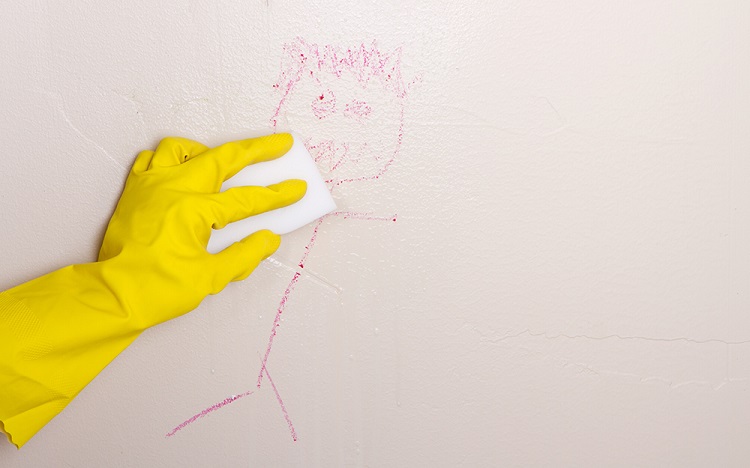
When you’re renting, keeping your walls in pristine condition is crucial if you’d like to get back your bond in full.
Marks such as grease, ink, and scuffed spots can be pretty challenging to address, yet there’s still hope for a complete refund. In fact, repairs aren’t always necessary. You just need some straightforward techniques to tackle them.
So, follow our practical suggestions to keep your surfaces immaculate and comply with your tenancy agreement. Ready to create an appealing living space without breaking the bank? Let’s make this happen!
Table of Contents
Assess the Stain Type
Before diving headfirst into cleaning, you should identify the type of mark you’re dealing with.
Different marks need different tactics. Say you’ve got greasy spots near the stove, warm, soapy water usually does the trick.
But, ink stains? You’ll need rubbing alcohol to break those down. The age of the mark matters, too. Old stains can be stubborn and often require multiple attempts to eliminate, whereas recent ones are simpler and rarely need vigorous scrubbing.
Documenting which stains you’ve addressed and the methods that turned out to be successful is always beneficial as well. To do this, you can use a journal or a mobile application.
Follow this advice, and your walls will remain spotless, probably eliminating any need for repainting soon.
Gather Non-Toxic Supplies
To maintain your surfaces without damaging them, you have to pick appropriate cleaning materials.
So, go for products that are gentle on these surfaces. Must-haves include bicarb, white vinegar, and microfibre cloths. These options are safe and often work better than strong chemicals.
Check your kitchen cabinets first—you might already have everything, which saves money and a trip out.
Utilising these mild cleaners protects paintwork and meets tenancy requirements. Not to mention, selecting non-toxic products benefits your budget and the planet, making it a wise choice for any tenant.
Test a Small Area First
To make sure that you won’t damage the paintwork, test your product on an inconspicuous section first.
Consider locations such as behind doors or near the skirting boards where errors won’t be visible.
Apply a small amount, wait several minutes, and see whether the paint flakes off or changes colour. Taking precautions now can prevent costly mistakes and additional work later.
Apply the Solution
If you’re dealing with annoying stains, you definitely need to use the right technique.
Take a soft cloth or sponge, immerse it in the cleaning solution, and carefully dab the affected area. Avoid scrubbing at all costs, as this can damage the paintwork. Then, allow the cleaner to rest for several minutes so it can work effectively.
Address small areas at a time to maintain control and prevent the stain from expanding. With some patience and this simple method, those walls will look refreshed without requiring a pricey paint job.
Use Gentle Abrasives for Tough Stains
What if you encountered persistent stains on your surfaces that simply won’t disappear? Well, there’s no reason to worry or begin planning an expensive repainting project just yet.
Consider trying a home remedy or a Magic Eraser. Both are excellent for addressing those stubborn marks.
Bicarbonate of soda is quite remarkable for natural cleaning purposes. It’s mild yet surprisingly effective at removing stains.
Starting small is sensible, so prepare just enough cleaning paste to cover the stain. Next, find a soft cloth—an old tee or microfibre towel fits the bill. These fabrics are gentle, so you won’t scratch or mess up the paint.
Take your paste and work it into the stain with little circular motions. Also, stay away from anything abrasive that might harm the surface. There’s no point in creating a worse issue!
When the stain begins lifting, clean away the paste using a moist cloth, and your wall should look good as new. There’s something oddly rewarding about seeing those marks disappear.
Keep in mind that while natural cleaners and magic erasers work great, they can scratch if you press too hard. So, go easy and resist the urge to rush for the best results.
When uncertain, try testing a small, hidden area first to make sure everything remains in excellent condition.
The next time stubborn stains appear, remember this useful technique. It’s simple, cost-effective, and quite revolutionary for maintaining your home without excessive fuss.
Alternatively, you can get further assistance from a local contractor, especially around the time your lease ends. A bond return cleaning should prepare your rental for the landlord’s inspection, and hopefully, you’ll pass it with flying colours and a full deposit.
Rinse and Dry the Area
After successfully removing a stain, it’s extremely important to complete the process by removing all excess detergent and remaining moisture. This maintains the wall’s appearance and prevents any potential damage.
Begin by gently wiping the spot with a moist cloth to eliminate any remaining product. This step is essential to avoid streaks or strange colours from cleaner residue. Following this, dry the area by patting it with a clean, dry cloth.
Prevent Future Stains
The goal is to keep your rental walls in excellent condition throughout your stay, and it’s actually quite simple if you use the right strategies.
When hanging items, use removable protectors or hooks to avoid leaving marks. Also, focus particularly on areas like corridors and entranceways since they accumulate dirt more rapidly. So, try to give them a quick wipe occasionally.
When you spot a stain, address it immediately to stop it from becoming permanent. Additionally, stick to a regular cleaning schedule to keep your surfaces looking brand-new and avoid larger issues later.
Conclusion
Looking after your walls doesn’t need to be a hassle. With the right tools, a bit of care, and some smart habits, you can keep things in great shape from day one to moving day.
Property managers notice when tenants treat a place with respect, and that can mean better references, a smoother exit, and your full bond back in your pocket.
So, stay on top of small issues, clean regularly, and protect your space before problems start. It’s all part of simple, stress-free tenancy management that really pays off.